



Description
Visual Details:
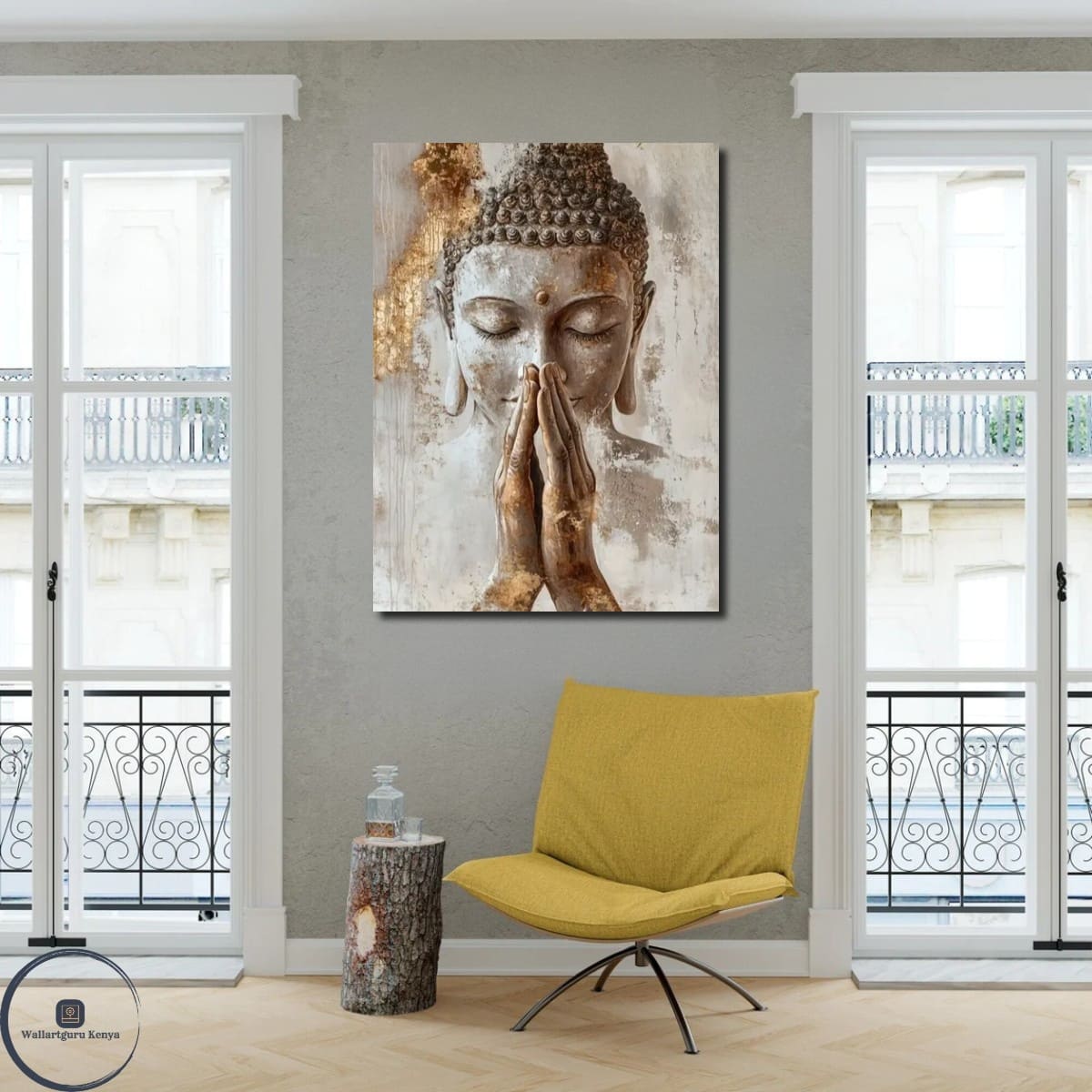
This contemplative piece presents a serene Buddha in the traditional Anjali Mudra—hands pressed together in prayer or greeting—rendered through sophisticated mixed-media technique that bridges classical spiritual iconography with contemporary abstract expressionism. The composition focuses on the upper body and face, capturing the essence of meditative peace through downcast eyes, serene expression, and the iconic ushnisha (cranial protuberance) adorned with characteristic curls rendered in rich golden bronze.
The artistic execution is remarkably layered and textural. The Buddha figure emerges from an atmospheric background of cream, soft grays, and warm earth tones applied with visible brushwork, drips, and gestural marks that suggest aged temple walls, weathered frescoes, or the passage of centuries. Strategic applications of gold leaf or metallic paint create luminous accents throughout—particularly concentrated in the hair and face—that catch light and add dimensional richness. The surface appears almost archaeological, as if the image has been revealed through layers of time, partially obscured by patina and age yet radiating timeless peace.
The color palette is deliberately muted yet warm: soft browns, creams, and grays provide atmospheric depth, while gold and bronze accents add sacred luminosity without overwhelming the composition’s essential quietude. The vertical portrait orientation emphasizes the meditative, contemplative quality—the viewer’s eye naturally rises upward, mirroring the spiritual aspiration the Buddha represents. The overall effect is sophisticated and museum-quality—this is spiritual art for contemporary spaces, honoring tradition while embracing abstract artistic freedom.
FOR WHOM:
This piece speaks to practitioners of Buddhism and meditation, admirers of Eastern philosophy and spiritual traditions, and collectors who appreciate religious iconography reimagined through contemporary artistic lenses. Ideal for those building collections around themes of mindfulness, spirituality, or world religions, patrons who value art that carries contemplative depth alongside aesthetic beauty. Perfect for individuals seeking artwork that supports meditation practice, creates peaceful atmosphere, or reflects personal spiritual journey.
This work resonates with yoga practitioners, meditation teachers, wellness professionals, and anyone drawn to Buddhist teachings or Eastern aesthetics. Suitable for collectors who appreciate mixed-media techniques, lovers of gold leaf and metallic accents, or patrons seeking artwork that bridges traditional subject matter with contemporary execution. An excellent acquisition for those creating sanctuary spaces—areas dedicated to reflection, practice, or spiritual renewal. This appeals to interfaith households, spiritual seekers beyond organized religion, or anyone who finds meaning in Buddhist principles of compassion, mindfulness, and inner peace regardless of religious affiliation.
WHERE TO DISPLAY:
- Meditation rooms and dedicated practice spaces as focal point supporting contemplative work
- Yoga studios and wellness centers creating authentic atmosphere aligned with Eastern practices
- Bedrooms fostering peaceful, restorative environment conducive to rest and reflection
- Home offices and workspaces providing visual reminder of mindfulness and centered presence
- Living rooms in homes embracing spiritual practice as expression of household values
- Spa reception areas and treatment rooms reinforcing tranquility and healing intentions
- Therapist and counselor offices where mindfulness-based practices are employed
- Boutique hotels and hospitality spaces particularly wellness retreats or Asian-inspired properties
- Buddhist centers, meditation halls, and interfaith spaces as contemporary devotional art
- Libraries and reading rooms where quiet contemplation naturally occurs
- Entryways creating immediate sense of peace upon arrival
- Massage therapy rooms and holistic health practices supporting healing environments
DESIGN NOTES:
The vertical portrait orientation gives this piece natural presence on the wall, drawing the eye upward in movement that mirrors spiritual aspiration. The muted palette with metallic accents means this work creates focal point through luminosity and subject matter rather than chromatic intensity—it commands attention through quiet power.
Wall color consideration: The staging photograph demonstrates exceptional placement against a soft blue-gray wall—this cool, neutral backdrop allows the warm golds and bronzes to glow beautifully while creating serene, spa-like atmosphere. This piece adapts gracefully to various wall colors: white or cream for clean, contemporary presentation, warm beige or greige that harmonizes with the earth tones, soft sage or dusty blue-green for spa-like tranquility, or even deeper charcoal or slate where the gold accents become truly luminous. The neutral palette of the artwork itself makes it remarkably versatile—it won’t clash but will add warmth and spiritual presence to virtually any color scheme.
Ideal companion elements: This work thrives in environments emphasizing natural materials, organic forms, and intentional simplicity, as beautifully demonstrated in the staging photograph. Note the perfect synergy with the mustard yellow modern chair (pulling golden tones from the artwork), natural wood side table, and minimalist aesthetic. Additional complementary elements include: natural fiber textiles (linen, cotton, jute) in neutrals and earth tones, bamboo or teak furniture, stone or ceramic vessels, singing bowls or meditation bells, live plants particularly those used in Asian traditions (bamboo, bonsai, peace lily), candles and incense holders, and cushions or meditation pillows in complementary tones.
The metallic gold accents provide excellent foundation for accent colors. Consider: mustard or golden yellow (as shown in staging), saffron or burnt orange echoing Buddhist monk robes, jade green for natural serenity, warm terracotta, or rich burgundy for depth. The piece works beautifully with both warm and cool palettes—the neutrals bridge temperature, while the gold provides consistent warmth.
Style compatibility: This piece transcends specific design trends while working beautifully with Asian-inspired interiors, contemporary minimalism, zen aesthetics, bohemian global eclecticism, or spa-like environments. The combination of traditional subject and contemporary execution makes it suitable for both classic and cutting-edge spaces—it honors heritage while feeling completely current.
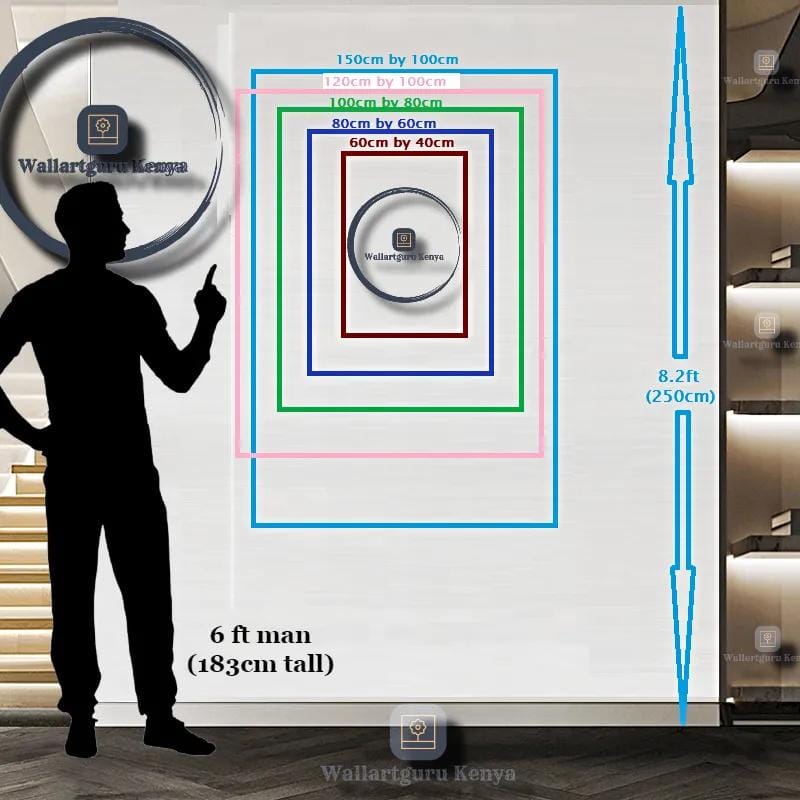
Scale and proportion: The staging demonstrates ideal sizing—the artwork is substantially scaled to create presence and focal point in the room. Buddha imagery benefits from appropriate scale that allows contemplation from various distances. Too small, and the meditative quality is lost; appropriately sized (as shown), the image invites sustained viewing and creates atmospheric shift in the space.
Placement height: Position at eye level when seated if the space is primarily used for meditation or contemplation—this allows comfortable viewing during practice. In standing areas, standard eye level (approximately 57-60 inches center) works well. The goal is comfortable, natural engagement that doesn’t require neck strain or awkward positioning.
Framing: The staging suggests frameless canvas gallery wrap or minimal float mounting—this maintains the work’s contemporary edge and allows the painterly, textural qualities to be fully appreciated. If framing, choose natural wood in medium to dark tones (particularly woods used in Asian furniture traditions like walnut or teak), or simple black frames for crisp contemporary presentation. Avoid ornate gilded frames that would compete with the gold leaf within the artwork. The textured, layered surface is best appreciated without glass that would create barrier or reflection.
Lighting is crucial for this piece: The metallic accents transform dramatically under different lighting conditions. Natural light reveals subtle color variations and textural complexity. Warm artificial lighting (2700-3000K) makes the gold leaf glow with sacred luminosity—perfect for evening meditation or creating peaceful atmosphere. Consider adjustable lighting that can create gentle illumination without harsh shadows. Many practitioners find that soft, indirect lighting best serves spiritual artwork—creating glow rather than spotlight.
Sacred space considerations: For practitioners, placement may carry spiritual significance. Traditional Buddhist practice suggests placing Buddha images at respectful height (not on floor level), in clean, honored locations, and treated with reverence. The contemplative, peaceful expression of this particular image makes it appropriate for meditation focus. The Anjali Mudra—hands in prayer position—is greeting, respect, and gratitude, making this welcoming image suitable for entry spaces as well as practice areas.
Symbolic and spiritual dimensions: Beyond aesthetic appeal, this artwork carries layers of meaning for practitioners: the downcast eyes suggest inward focus and meditation, the prayer hands represent respect and spiritual aspiration, the serene expression embodies equanimity, and the golden tones reference enlightenment and spiritual illumination. These symbolic layers make the piece rewarding for sustained contemplation—it functions as support for practice, not merely decoration.
Curatorial opportunities: This piece pairs beautifully with other spiritual or contemplative artwork—consider companions like mandala prints, zen circle (enso) paintings, lotus imagery, or Asian calligraphy. It also harmonizes with abstract work in complementary palettes, nature photography emphasizing tranquility, or minimalist compositions. In gallery walls, give this piece prominence—its spiritual content deserves feature placement where it can be properly contemplated.
Interfaith and universal appeal: While rooted in Buddhist iconography, the universal themes of peace, meditation, and inner stillness transcend specific religious boundaries. The contemporary, artistic treatment makes this accessible to viewers from various spiritual backgrounds who appreciate the values embodied rather than specifically practicing Buddhism.
Atmospheric impact: This piece literally changes the energy of a space—its presence creates invitation to slow down, breathe deeply, and find center. In homes, it offers visual sanctuary from external demands; in professional spaces, it provides grounding anchor; in practice spaces, it supports the work being done.
Reviews
There are no reviews yet.