



Description
Visual Details:
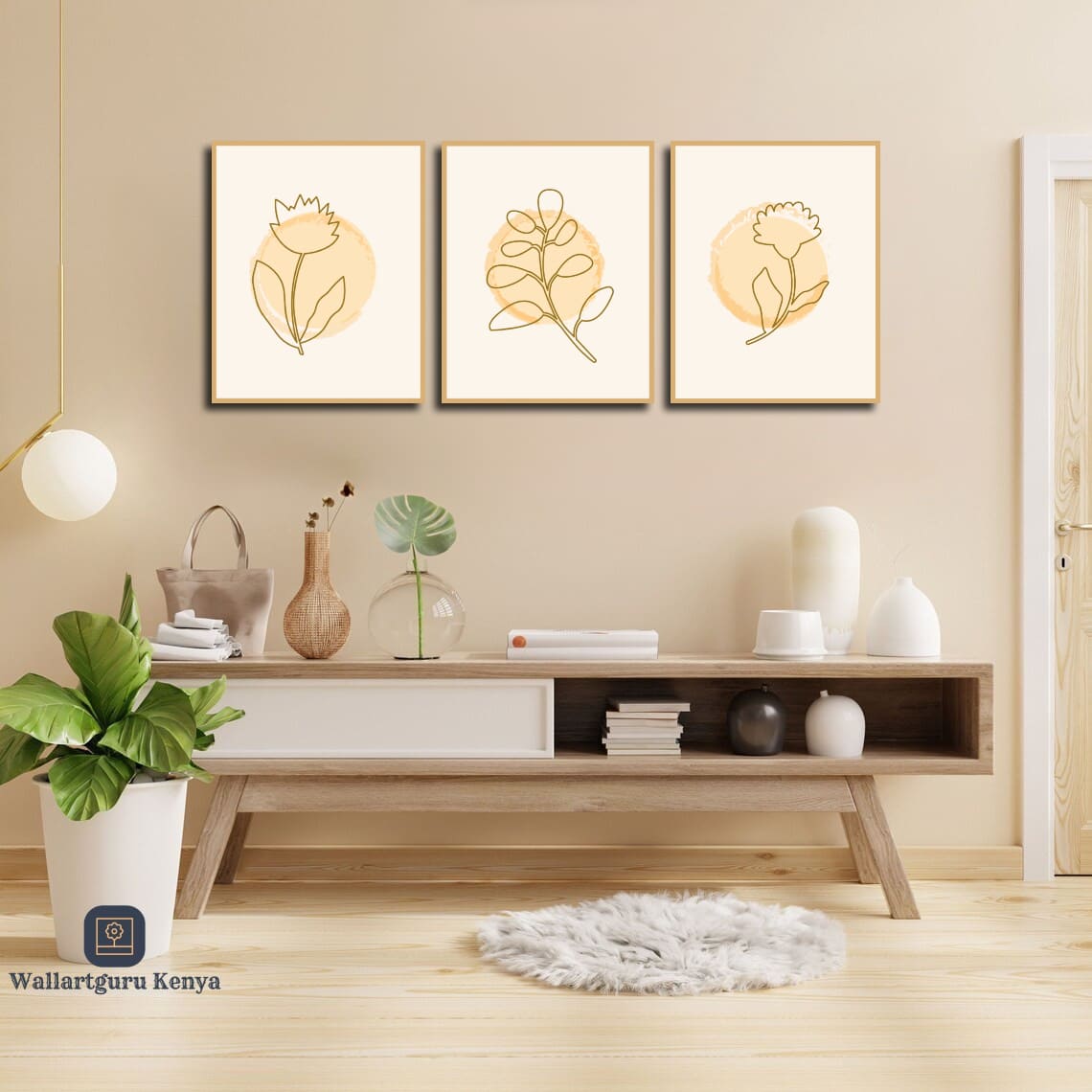
This serene botanical triptych celebrates the elegant simplicity of line drawing through three delicate leaf studies rendered in warm golden tones. Each panel features a single botanical specimen—appearing to be various tropical or deciduous leaves—drawn with continuous, flowing lines that capture essential form while maintaining artistic abstraction. The drawings have an almost gilded quality, as if rendered in liquid gold or warm ochre ink, creating luminous presence against pristine white grounds.
The artistic approach recalls both scientific botanical illustration and contemporary minimalist line art. There’s beautiful economy in the execution—each leaf is suggested rather than exhaustively detailed, with strategic emphasis on the central vein structure, major leaf veins, and overall silhouette. The lines vary subtly in weight, creating dimensional suggestion and organic authenticity. The color choice is sophisticated: not stark black but rather a warm golden-tan that feels organic, earthy, and utterly contemporary.
The three specimens vary in form—one appears more elongated and singular, another shows compound or palmate structure, the third offers different leaf shape—creating visual rhythm and botanical diversity across the triptych. The white backgrounds are generous, allowing each delicate drawing to float in space with breathing room that enhances the meditative, contemplative quality. The overall effect is simultaneously scientific and poetic, minimal and warm, nature-inspired and utterly refined—botanical art stripped to its essential beauty.
FOR WHOM:
This piece speaks to admirers of botanical art, lovers of minimalist aesthetics, and patrons who appreciate nature-inspired design executed with contemporary restraint. Ideal for collectors building around natural history themes, biophilic design principles, or Scandinavian-influenced interiors. Perfect for those who favor earth tones, organic forms, and artwork that creates peaceful ambiance without demanding constant attention.
This work resonates particularly with individuals seeking art that bridges scientific observation and aesthetic beauty—those who appreciate herbarium specimens, pressed flower collections, or the long tradition of botanical illustration reimagined for contemporary spaces. Suitable for plant enthusiasts, gardeners bringing their passion indoors, admirers of Japanese wabi-sabi philosophy, or anyone drawn to the intersection of nature and art. An excellent acquisition for emerging collectors seeking approachable, versatile contemporary art, or established patrons looking for pieces that provide visual rest in curated environments. This appeals especially to those who understand that simplicity requires as much artistic discipline as complexity.
WHERE TO DISPLAY:
- Living rooms and sitting areas where the horizontal triptych format works beautifully above sofas, console tables, or low credenzas
- Bedrooms creating tranquil, nature-connected sanctuaries conducive to rest
- Home offices and workspaces providing gentle visual interest without distraction—ideal for concentration
- Dining rooms where botanical themes complement the ritual of gathering around food
- Entryways and hallways offering welcoming, universally appealing first impressions
- Bathrooms and powder rooms as unexpected moments of refined botanical beauty
- Scandinavian, Japanese, or minimalist interiors where restraint and natural materials dominate
- Wellness centers, spa reception areas, and yoga studios creating peaceful, nature-connected atmospheres
- Healthcare facilities and therapy offices where calming imagery supports healing
- Boutique hotels and Airbnb properties seeking artwork that feels both designed and approachable
- Botanical gardens, garden centers, and plant shops as authentic thematic artwork
- Contemporary nurseries and children’s rooms providing gentle visual stimulation
DESIGN NOTES:
The three-panel horizontal triptych format offers exceptional versatility and visual impact. The panels work cohesively as unified composition while each maintains individual integrity—they can be hung closely together (as shown in staging with minimal gaps) or spaced slightly apart for more architectural, gallery-style presentation. The modest scale (suggested by 300×300 filename) makes this suitable for various wall sizes without overwhelming.
Wall color consideration: The warm beige wall shown in the staging photograph is inspired—neutral, earthy tones allow the golden drawings to harmonize while the white backgrounds provide crisp contrast. This work adapts beautifully to multiple wall colors: white or cream walls for maximalist clean aesthetic, soft sage or dusty green for tonal botanical harmony, warm gray or greige for sophisticated contemporary spaces, or even deeper earth tones (terracotta, warm taupe, soft clay) where the white grounds appear luminous.
Ideal companion elements: This piece thrives in environments emphasizing natural materials and organic forms, as beautifully demonstrated in the staging photograph. Note the perfect synergy with light wood furniture (the mid-century style credenza), live plants (the monstera and small botanical specimens), natural textures (the round woven rug, ceramic vessels), and warm neutral palette. Additional complementary elements include: linen and cotton textiles in cream and earth tones, rattan and wicker accents, ceramic planters and vessels in terracotta or cream, dried botanicals and pampas grass, natural fiber baskets, and warm metallic accents in brass or brushed gold.
The golden-ochre drawing color provides excellent foundation for accent colors. The staging demonstrates effective use of warm peachy-tan ceramics that echo the drawing tones. Consider also: sage green for botanical connection, soft terracotta for earthy warmth, cream and ivory for tonal layering, or muted coral for gentle color interest.
Scale and proportion: The staging photograph demonstrates ideal proportions—the triptych spans most of the credenza width below with slight margins, creating balanced visual weight without overwhelming. The pieces are hung at appropriate height, allowing comfortable viewing while maintaining relationship with furniture below. This scale works beautifully for standard residential walls and moderate-sized furniture pieces.
Framing is crucial to this work’s success: The staging shows thin natural wood frames (appears to be light oak or ash) that perfectly complement the warm drawing tones and organic subject matter. This framing choice is ideal—it adds subtle definition without competing with the delicate drawings. Alternative framing could include: white or cream frames for seamless, floating effect where frames nearly disappear, thin gold or brass frames to emphasize the gilded quality of the drawings (though use judiciously to avoid overwhelming delicate art), or even frameless float mounting for ultra-contemporary minimalism. Avoid dark or heavy frames that would create excessive contrast with the gentle drawings.
Lighting consideration: This work benefits from natural light that reveals the warm tonality and delicate line work. Under warm artificial lighting (2700-3000K), the golden drawings become particularly luminous and inviting, creating cozy ambiance perfect for living spaces. The white backgrounds don’t require dramatic lighting but ensure even illumination prevents shadows or hotspots that could distract from the refined simplicity.
Styling synergy: The staging photograph is masterclass in cohesive design—every element reinforces the overall aesthetic. The spherical white lamp echoes organic forms, the varied ceramics provide tonal harmony, the live plants create three-dimensional botanical conversation with the two-dimensional art, and the neutral palette allows the artwork to anchor the space. This demonstrates the piece’s versatility as foundation for layered, curated styling.
Seasonal adaptability: The botanical subject and warm neutral palette feel appropriate year-round. The earth tones suggest autumn naturally but work equally well in spring (new growth), summer (lush foliage), and winter (dried botanicals). This temporal flexibility means the piece never feels seasonally dated or limiting.
Botanical authenticity: While stylized, these drawings maintain botanical integrity—leaf structure, venation patterns, and forms are recognizable even if not scientifically precise. This balance between accuracy and artistic interpretation makes the work appeal to both plant enthusiasts who appreciate the subject matter and design lovers who value the aesthetic execution.
Installation consideration: For triptychs, precise alignment is essential. Use level and careful measurement to ensure all three pieces align horizontally with even spacing between panels. Consider the panels’ relationship to furniture below—centered alignment typically works best, as demonstrated in staging. Create paper templates before drilling to ensure accuracy.
Curatorial opportunities: This triptych pairs beautifully with other botanical prints, pressed flower art, or nature photography in gallery wall arrangements. It also harmonizes with abstract work in complementary earth tones, vintage botanical illustrations for eclectic collections, or minimalist line drawings of other subjects. The neutral palette and modest scale make it exceptionally flexible in mixed collections.
Reviews
There are no reviews yet.